
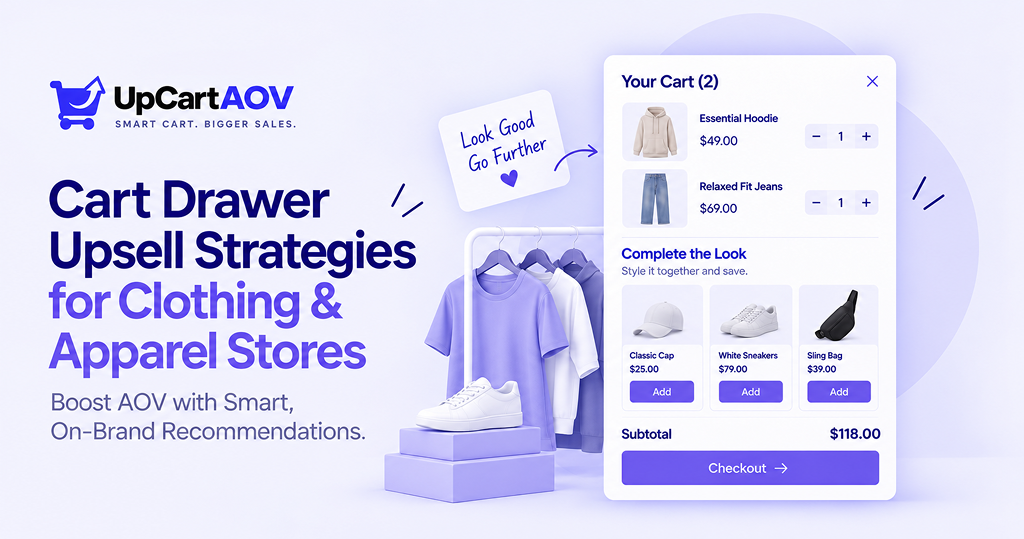
It’s 9:42 PM. Riya has been scrolling your Shopify store for eleven minutes. She’s added a linen shirt to her cart, gone back to look at a scarf, hovered over a pair of earrings, and closed the tab twice already.
Right now, her cart drawer is open, and this is the single most honest moment she’ll have with your brand all night.
She’s not browsing anymore. She’s deciding.
I’ve spent close to two decades building Shopify stores for apparel and D2C brands at ControlF5, and here’s the part most clothing brands get wrong: they treat the cart drawer like a receipt.
A summary. A “here’s what you picked, now go pay” screen. In my experience, for clothing stores, the cart drawer is something much bigger; it’s the last fitting room before checkout. It’s where “just the shirt” quietly becomes “the shirt, the scarf, and free shipping too.”
This is my walkthrough of that moment, cart drawer upsell strategies for apparel stores that feel like styling advice, not sales pressure, based on what I’ve actually seen move average order value across the stores I’ve built.
Why the Cart Drawer Is Prime Upsell Real Estate for Apparel Stores
Think about how differently people shop for clothes versus, say, a phone charger.
Nobody agonizes over a charger. But clothes carry questions:
- Will this fit?
- Does it go with anything I already own?
- Is this actually “me”?
That hesitation is exactly why fashion sits among the highest cart-abandonment categories in retail; shoppers treat the cart as a wishlist more than a commitment, circling back to “maybe” long before they ever get to “yes.”
Mobile makes this sharper, since a huge share of apparel browsing happens mid-commute or on a coffee break, in short bursts of attention rather than one focused session.
So the cart drawer isn’t just a UI element sitting at the edge of the screen. For a Shopify cart drawer upsell for clothing brands, it’s the exact moment you either resolve that hesitation or lose the sale to it.
What I’m Actually Seeing Work in Apparel Cart Drawers Right Now
One of the clearer examples from my own work is Obi Outfitters, a USA-based baby and puppy apparel brand I took from zero online presence to a fully functioning Shopify store with a real content and SEO engine behind it. Everything, cart experience included, had to be designed to convert from day one.
Across that build and the other apparel and accessories brands I’ve worked on, one pattern keeps repeating: it’s rarely the number of upsells in a cart drawer that drives AOV up. It’s whether they feel like they belong there.
A few things I consistently see:
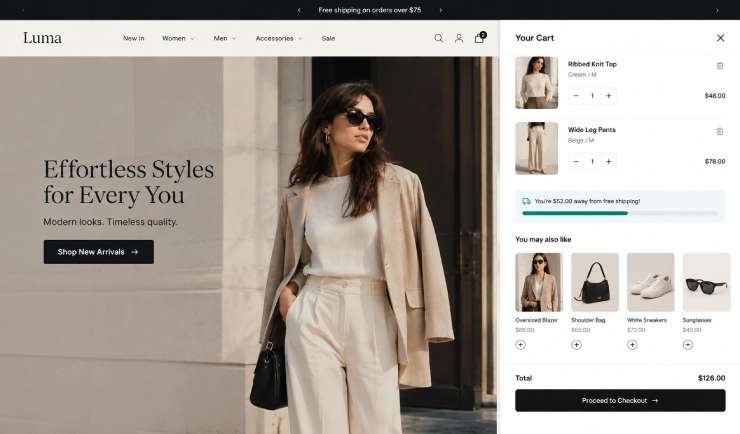
- A free shipping progress bar is almost always the fastest win; shoppers add one more item just to close a $9–$12 gap, because it stops feeling like spending and starts feeling like not leaving value behind.
- Apparel upsells work best when they’re wearable and small: socks, a beanie, a tote, not random cross-category filler.
- The opposite pattern is just as consistent: stores running generic “customers also bought” widgets with zero styling logic, showing a winter coat next to swim shorts. It doesn’t just fail to convert; it makes the store feel less trustworthy, right when trust matters most.
The difference between those two outcomes isn’t budget. It’s whether the upsell logic understands clothes, not just SKUs.
The Core Upsell Mechanics for Clothing Stores
Let’s get practical. Here’s the flow a well-built apparel cart drawer actually follows, and the mechanics behind each step.
| Shopper adds an item ↓ Cart drawer opens ↓ Frequently Bought Together ↓ 1–2 styled pairings shown ↓ Complete the Look ↓ Full outfit bundle, one “add all” tap ↓ Free shipping progress bar ↓ Nudges one more small add-on ↓ Checkout, with shipping protection offered once |
Each block earns a specific job in that flow; here’s what each one is actually doing.
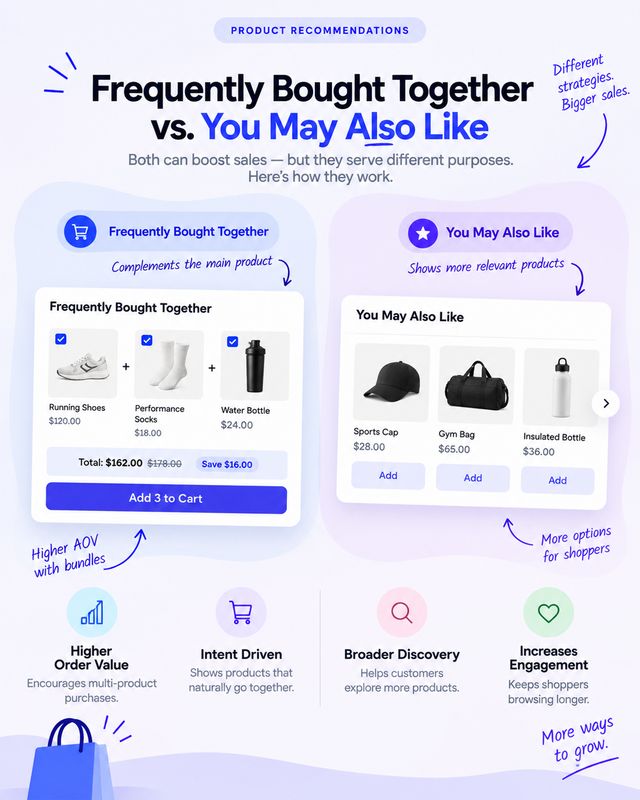
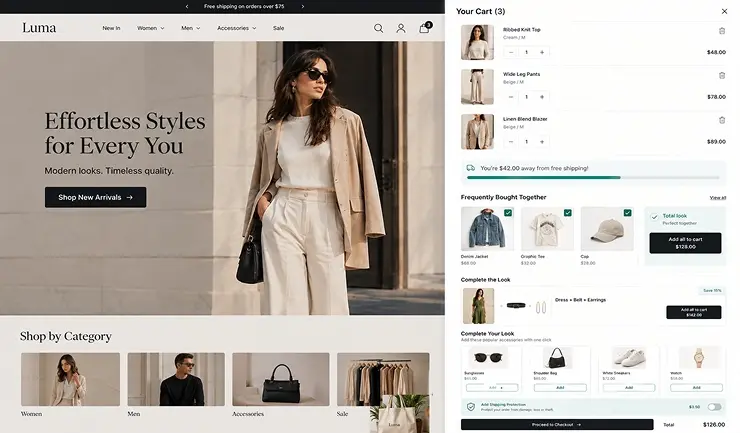
1. Frequently Bought Together: Outfit Building, Not Random Pairing
For apparel, “frequently bought together” only works when it thinks like a stylist, not an algorithm. A denim jacket paired with a graphic tee and a cap feels like a look. Paired with a random phone case, it feels like a glitch.
This is where complementary product upsell in cart drawer placements earn their keep, hand-picked pairings a shopper can glance at and immediately understand.
How to use it: turn this on for your top 5–10 best sellers first, not your whole catalog.
How to make it more effective: in my experience, hand-picking 1–2 pairings per product beats letting an algorithm auto-suggest; the algorithm doesn’t know a jacket looks better with boots than with sandals, you do.
Add social proof: show ratings, review counts, or short customer feedback alongside recommended products when possible. A shopper who sees that other customers are buying and enjoying the suggested item has an extra reason to consider adding it to the cart.
Use checkout: keep relevant upsells available during checkout as well, especially for simple add-ons such as accessories, matching basics, or low-cost complementary items. The key is to keep the offer relevant and easy to accept without interrupting the purchase.
2. Complete the Look Bundles
This is the cart drawer saying, “here’s the rest of the outfit”: a dress, a belt, and earrings shown as one clickable set with a single “add all” button. Complete the look cross-sell clothing stores run this way consistently outperform generic carousels, because the shopper isn’t being sold to. They’re being shown a finished outfit they didn’t have to assemble themselves.
How to use it: build these around your hero products, the pieces your product photography already styles as full outfits.
How to make it more effective: I suggest keeping the bundle to 3 items max; beyond that, the “add all” button starts feeling like a bigger commitment than a single upsell should.
3. One-Click Accessory Add-Ons
Accessories are the easiest upsell in apparel, low-commitment, high-margin. A one-click add upsell for apparel accessories removes every point of friction between “I like that” and “it’s in my cart.” No new page. No re-entering size or color. One tap.
How to use it: place these lowest in the drawer, right above the checkout button, so they’re the last thing a shopper sees before paying.
How to make it more effective: in my experience, price these under a third of the cart’s current value; anything higher and it stops feeling like an impulse add.
If you’re deciding between adding the offer before checkout or after the purchase, understanding the difference between one-click vs post-purchase upsells can help you choose the right approach for your store.
4. The Free Shipping Progress Bar
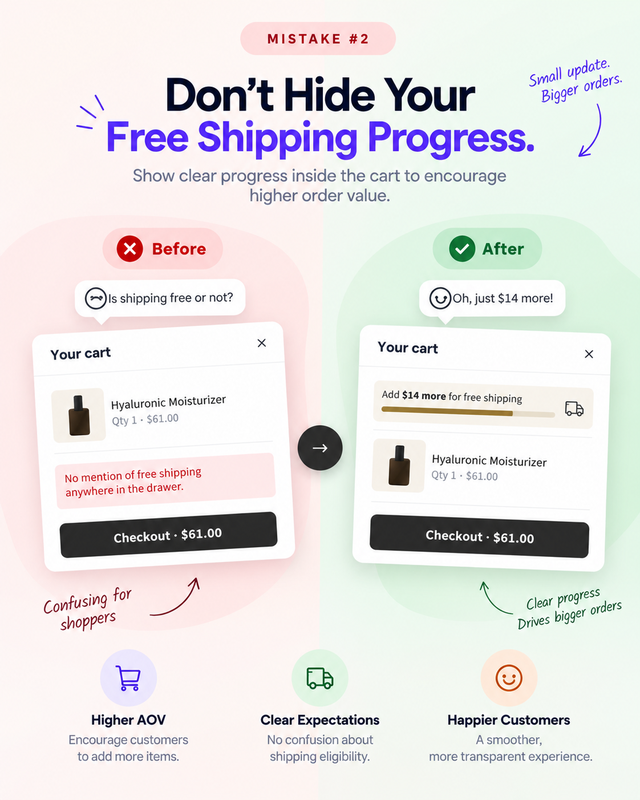
Quietly the highest-converting block in most apparel cart drawers. A free shipping progress bar cart drawer fashion shoppers can watch fill up in real time turns “almost there” into a reason to add one more item, instead of a reason to close the tab.
How to use it: set the threshold just above your current average order value, close enough to feel reachable.
How to make it more effective: I always pair this with an accessory upsell right underneath it, so the shopper sees exactly what closes the gap instead of having to go find something themselves.
5. Free Gift With Purchase
Time-boxed and seasonal, “spend $75, get a free tote.” Works especially well in apparel because the gift can be genuinely covetable: a mini bag, a keychain, a sample-size product.
How to use it: run this around a real seasonal moment, a launch, a sale, a holiday, rather than leaving it on permanently.
How to make it more effective: I suggest choosing a gift that’s wearable or usable, not a generic freebie; it should feel like it belongs in the same collection as what they’re buying.
6. Shipping Protection
Apparel carries real shipping risk: delicate fabric, easily-creased garments, higher return rates than most categories. A one-click toggle here isn’t just extra revenue; it’s a legitimate reassurance.
How to use it: keep it opt-in, never pre-checked; auto-added charges are one of the fastest ways to lose trust right before checkout.
How to make it more effective: frame the copy around protection, not cost; “protect your order” converts better than “add $3.00.”
Comparing the Core Upsell Mechanics
Before deciding where to start, it helps to see these side by side; they solve different problems.
| Mechanic | Best for | Shopper feels like… | Typical trigger point |
| Frequently Bought Together | Pairing 1–2 high-affinity items | “Oh, that goes together” | Product page + cart drawer |
| Complete the Look | Multi-item outfit bundles | “This is a full look, done for me” | Cart drawer, after 1+ apparel item added |
| One-Click Accessory Add-On | Low-cost, high-margin extras | “Why not, it’s one tap” | Cart drawer, near checkout button |
| Free Shipping Progress Bar | Nudging cart value upward | “I’m so close, might as well” | Cart drawer, always visible |
The Merchandising Logic Behind Good Apparel Upsells
More recommendations isn’t the same as better recommendations.
A cart drawer crowded with six suggested products feels like a garage sale, not a fitting room. Two or three well-matched items outperform six generic ones, simply because the shopper can actually process what they’re being shown.
Personalizing upsells based on cart contents can help you show products that actually complement what the shopper has already added, rather than relying on generic recommendations.
Same-collection matching vs. manual curation
- Shopify’s own same-collection logic is a fine starting point; it knows two items share a collection.
- It doesn’t know they belong in the same outfit. That’s the ceiling.
- Manual curation takes more setup time, but it’s where the real AOV lift happens in fashion, where visual coherence matters more than category overlap.
Mobile is the majority of your traffic
Since most apparel browsing happens on a phone, mobile cart drawer upsell best practices aren’t optional polish; they’re how most shoppers will actually experience your drawer:
- Large, thumb-friendly tap targets
- Image-first cards, not text-heavy descriptions
- Everything visible within one scroll
If a shopper has to pinch-zoom to read a recommendation, the upsell is already lost.
What the Data Actually Says
A quick, sourced snapshot, because “best practice” claims are cheap without numbers behind them.
| Data point | Figure | Source |
| Average ecommerce cart abandonment rate | ~70% | Baymard Institute |
| Shoppers abandoning due to unexpected checkout costs | ~48% | Baymard Institute |
That last row matters most: nearly half of abandonment isn’t about the product; it’s a surprise at the final step.
A visible free shipping progress bar cart drawer fashion shoppers can track removes that surprise before it happens, which is a big part of why AOV increases with cart drawer upsells fashion brands report tends to track closely with how well a store closes that “unexpected cost” gap.
Common Mistakes Apparel Brands Make With Cart Drawer Upsells
A few patterns worth naming honestly, because they quietly undo everything above:
- Discount-stacking that erodes margin: a sale, an automatic free gift, and a free shipping bar all firing at once can push a store into giving away more than it gains.
- Irrelevant recommendations that break trust: a swimsuit shown next to a winter coat isn’t a missed upsell; it’s a complementary product upsell in cart drawer logic that’s clearly broken.
- Ignoring size and fit context: recommending “complete the look” items without accounting for the size or color already selected creates friction, not ease.
- Too many blocks firing at once: FBT, complete-the-look, a gift offer, and shipping protection all showing together overwhelms rather than persuades.
How to Set This Up Without a Developer
The mechanics above can sound like a lot of custom build work — theme edits, developer hours, QA cycles. For most Shopify apparel stores, it isn’t. Here’s the actual click-path for getting a Shopify cart drawer upsell for clothing brands live, using UpCartAOV’s dashboard.
Step 1:
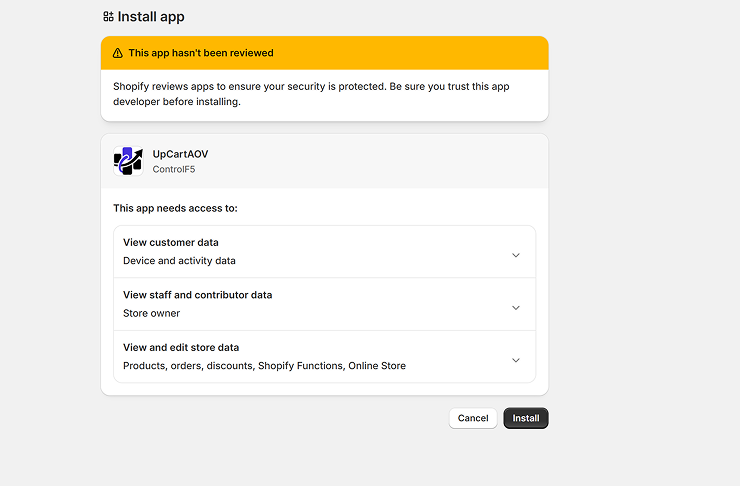
Install UpCartAOV from the Shopify App Store, then open it from Shopify Admin → Apps → UpCartAOV.
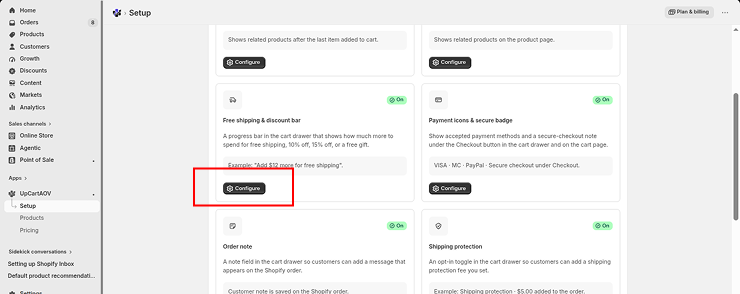
Step 2: Click “Free Shipping & Discount Bar” and toggle it On. Set your spend threshold just above your current average order value, then save.
Step 3: Click “Frequently Bought Together” and toggle it On. Switch pairing mode to manual for your top 5–10 sellers, so you’re choosing the pairings yourself instead of letting the app auto-generate them.
Step 4: Click “You May Also Like” and switch the source to manual picks. This is where you build your Complete the Look style groupings and one-click accessory add-ons.
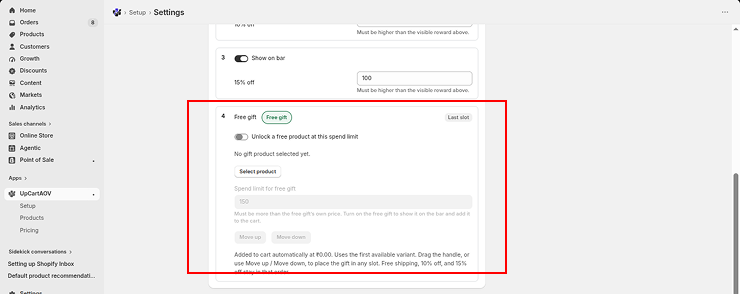
Step 5: Click “Free Gift with Purchase” and toggle it On for a seasonal window — set the spend threshold and pick a product that’s genuinely wearable or usable, not filler.
Step 6: Click “Shipping Protection” and toggle it On as opt-in, not pre-checked.
Step 7: Use the live storefront preview inside the dashboard to check mobile view — tap targets, image sizing, one-scroll visibility, before you publish.
Each block typically takes about two minutes to configure — often the real difference between “we should try upsells someday” and having them live before the weekend.
Quick-Start Checklist for Apparel Merchants
- Turn on a free shipping progress bar first; it’s the single highest-leverage, lowest-effort win.
- Curate 2–3 complete-the-look cross-sell clothing store bundles manually for your top 5 best-selling items.
- Add a one-click upsell for apparel accessories only for items under a third of your average product price.
- Cap cart drawer recommendations at 2–3 visible items at once; this is one of the simplest mobile cart drawer upsell best practices to follow.
- Review pairings monthly; apparel inventory turns over fast, and stale recommendations age quickly.
- Test a free gift with purchase around a seasonal threshold, not permanently.
Bringing It Back to Riya
Go back to that 9:42 PM moment. Riya opens her cart drawer. She sees the linen shirt she picked, and right underneath it, a lightweight scarf that’s been styled with it before, a progress bar showing she’s $9 from free shipping, and nothing else competing for her attention.
She doesn’t feel sold to. She feels like the store just finished her outfit for her.
That’s the entire idea behind good cart drawer upsell strategies for apparel stores: not more noise, just better timing.
If you’re running a Shopify store and want these blocks live without touching a line of theme code, that’s exactly what I built UpCartAOV to do.
FAQs
Question: Does a free shipping bar actually work for apparel specifically?
Answer: Yes, apparel add-ons like accessories and basics are cheap relative to the anchor product, so a $9–$15 gap feels easy to close. In my experience, it’s usually the fastest block to show results, often within the first week.
Question: How many upsells should a cart drawer show at once?
Two to three, maximum. Beyond that, it stops reading as curation and starts reading as clutter, especially on mobile, where every extra item competes for the same thumb-width of attention.
Question: Is Frequently Bought Together different from Complete the Look?
Yes. FBT is a tighter, 1–2 item pairing shown per product, think jacket plus scarf. Complete the Look is a broader, styled bundle, often 3+ items, built to feel like a finished outfit. FBT nudges; Complete the Look does the styling for the shopper.
Question: Do cart drawer upsells work better than pop-up upsells?
Generally yes for apparel. A pop-up interrupts the shopper mid-decision, while a cart drawer upsell shows up at a moment they already chose to open the drawer, so it feels like part of the flow rather than an ad breaking in.

